The seven replies you get, and the six most teams mishandle
A reply answered within the hour books at roughly twice the rate of the same reply answered tomorrow. A third of replies are negative and half of those are worth more than a meeting.

Companies spend three months building an outbound programme and then lose most of its value in the inbox. The list was researched, the infrastructure was warmed, the message was tested, and then a reply sat unanswered for two days because nobody owned it.
Reply handling is where outbound converts or does not. It is also the cheapest part to fix.
Speed decides more than wording
Across the campaigns we run, a reply answered within an hour books a meeting at roughly twice the rate of the same reply answered the following morning. The prospect wrote to you in a gap between two other things. That gap closes.
Assign the inbox to one person with a stated window, nine to six local, and a fallback for holidays. A shared inbox that everyone can see and nobody owns produces the worst outcome, because each person assumes another has it.
If you cannot staff a one-hour response, do not launch the campaign. Sending 5,000 emails into a market and answering the replies on Fridays wastes the domain, the list and the market's attention at once.
The seven replies you will get
Almost every reply to a European B2B cold campaign falls into one of seven buckets. Handle each one differently.
| Reply type | Share of replies | Next move |
|---|---|---|
| Interested, wants to talk | 10% to 20% | Propose two specific times within 48 hours |
| Interested, wants information first | 10% to 15% | Send one page, then propose a time in the same message |
| Wrong person, offers a referral | 10% to 15% | Ask for the name, then open a new thread quoting the referral |
| Not now, timing | 15% to 25% | Ask what changes and when, then diarise that date |
| We have a supplier | 10% to 20% | Ask when the contract renews, then diarise |
| Not interested, no reason | 15% to 25% | One question, then stop |
| Remove me | 10% to 20% | Suppress across every domain within the hour, confirm in one line |
Roughly a third of replies to a cold campaign are negative, and about half of those contain something worth knowing. Teams that treat the negative pile as noise throw away the cheapest market research they will ever get.
The three replies most teams mishandle
"Not now, ask me in six months"
The standard response is to set a reminder and send the same email in six months. That converts poorly, because six months later they have forgotten the thread and you have nothing new to say.
Ask a question instead: "Understood. What normally has to happen before this becomes a priority?" The answer gives you the actual trigger, which is worth more than the meeting you did not get. Diarise against the event they named rather than against a calendar interval, and reopen with a reference to their own words.
"We already work with someone"
Not a rejection. A statement of fact about the current quarter.
Ask when the arrangement comes up for review. Most people answer, because the question is harmless and specific. You have now converted a dead lead into a dated one, and a dated lead is exactly what your next campaign needs.
Do not attack the incumbent. The person who chose them is often the person reading your email.
"Not interested"
Two words, no reason. Send one question and then stop, permanently.
"Fair enough. So I stop guessing, was it the timing or is this not something you deal with?" About a fifth of people answer, and the answer tells you whether your targeting or your offer is the problem. The other four fifths do not, and you leave them alone.
Sending a second pitch after "not interested" is how a company earns a spam complaint, and in Germany how it earns a cease and desist letter.
Out-of-office replies are data
An automatic reply usually contains a full name, a direct phone number, a job title and the name of a colleague covering their work. That is four fields you were missing, delivered free.
Parse them. Update the record. Add the covering colleague to the account. Most teams filter these into a folder nobody opens.
Booking without friction
A calendar link in the first reply loses meetings. It asks the prospect to do the work of choosing, and it reads as a step in a process rather than a conversation between two people.
Propose two specific times. "Thursday 14:00 or Friday 10:00, Vilnius time, whichever suits." Include the timezone, which matters across a continent that spans three of them. Offer the link only after they accept, as the confirmation mechanism.
Confirm the day before with one line. European no-show rates on cold-sourced meetings run between 20 and 30 percent without a confirmation and roughly halve with one.
What to write down
Every reply, coded by type, with the segment it came from. After 1,500 sends you can answer the questions that decide the next campaign: which segment produces positive replies, which objection repeats, which country ignores you, which title actually answers.
Teams that only record the meetings have a calendar. Teams that record all seven categories have a market map, and the second one is what tells you where to send next month.
Ripe Leads runs the inbox and the sending
Ripe Leads is KoFi Tech's outbound arm. Replies are answered inside the working day, coded by category and segment, and the negative pile is reported back rather than discarded.
Visit Ripe LeadsRead next
-
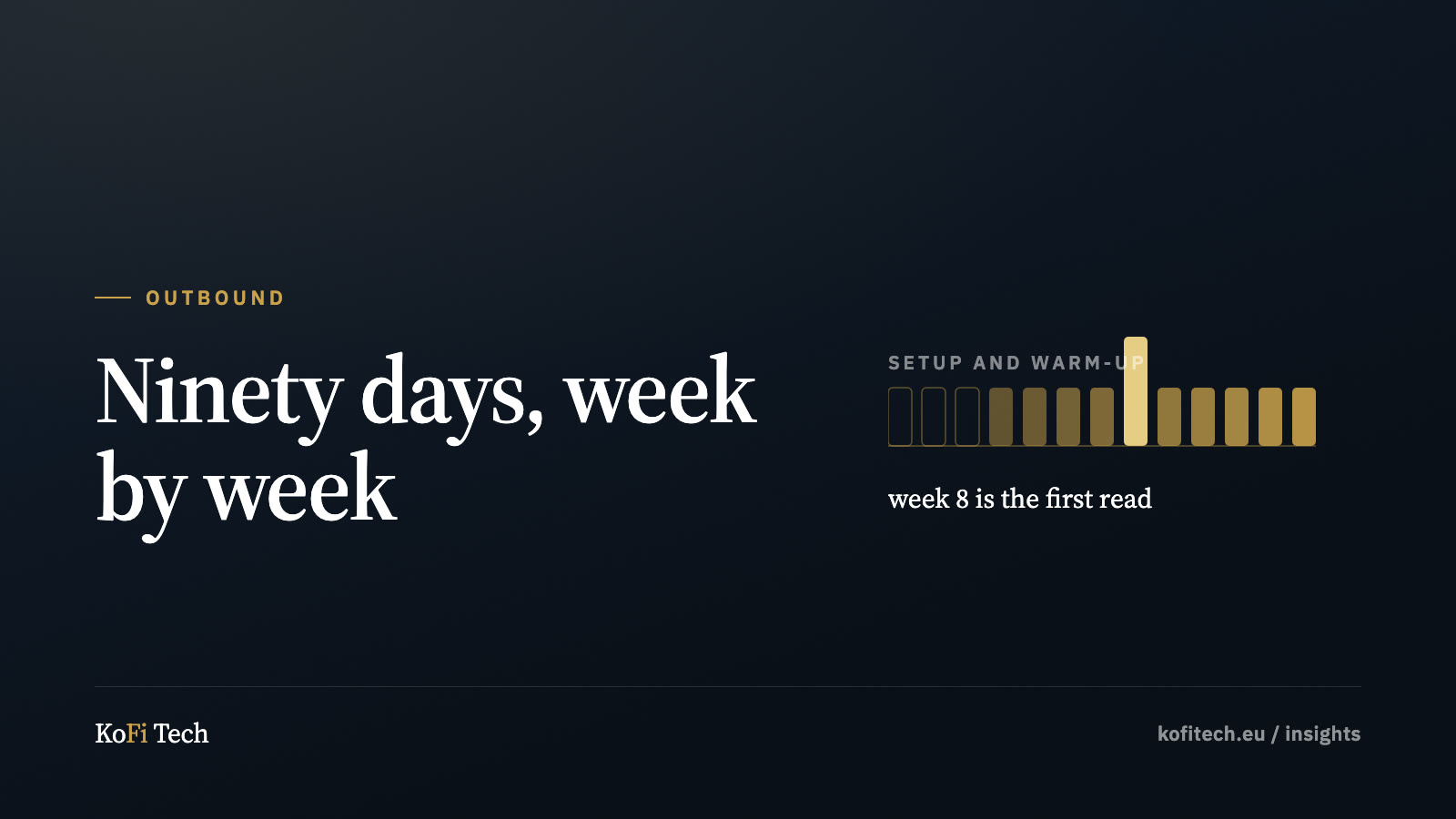
What the first 90 days of an outbound programme actually contain
Sign in the first week of March and the meetings start in late April. Three weeks of that belongs to a mail server rather than to anybody's effort.
-
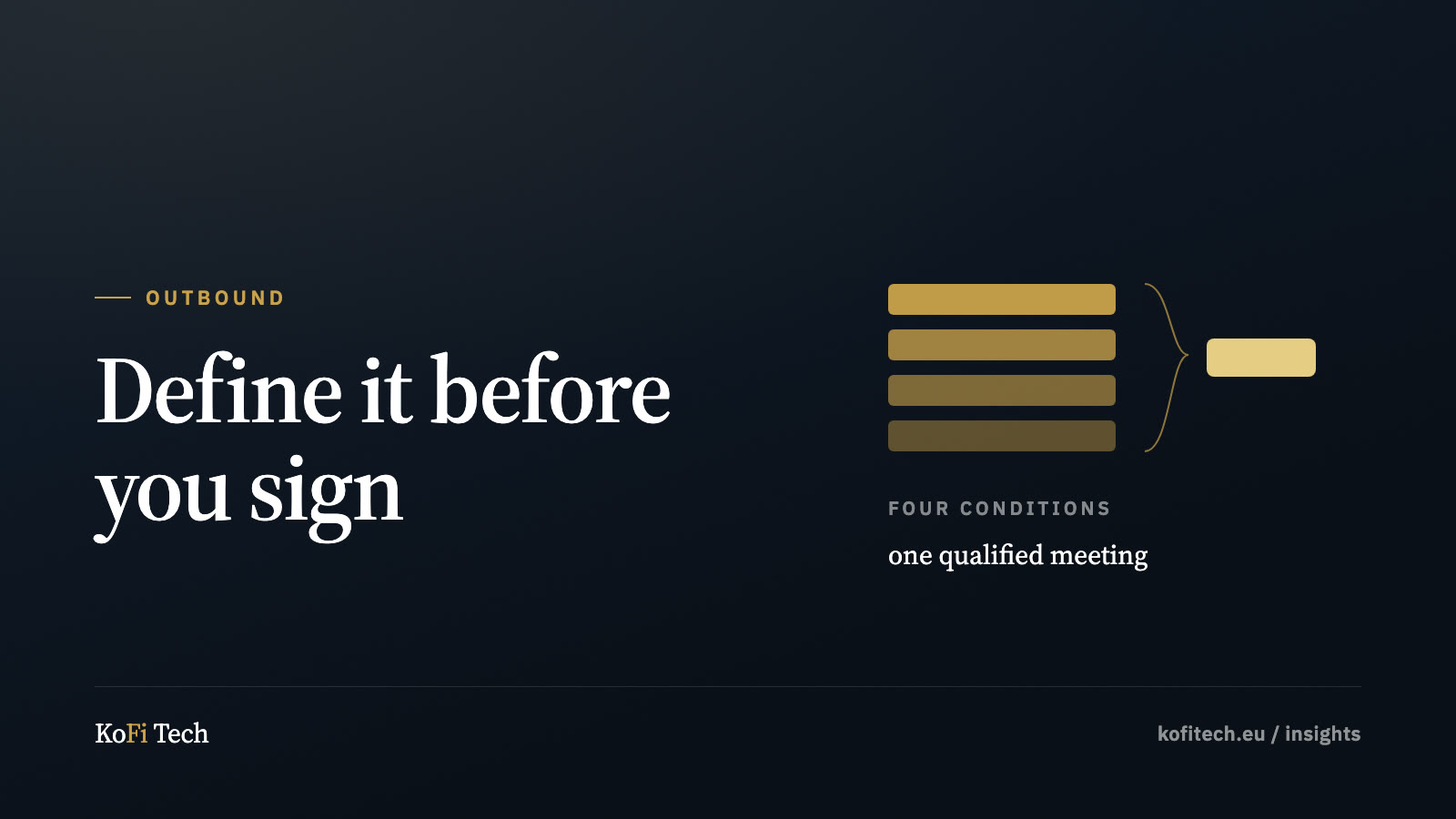
Define a qualified meeting before you sign, or argue about it in week six
Most disputes with a lead generation agency come from one omission. The contract decides more about the outcome than the agency does.

