Cold email in Germany: why the GDPR is the easier half
German competition law treats unsolicited commercial email as an actionable nuisance, and it lets your competitors act on it. The channel that works there is not email.

Germany is the largest B2B market in the European Union and the hardest one to enter by cold email. Not because the buyers are hostile, but because German law treats an unsolicited commercial email as an actionable nuisance, and it hands the right to sue to your competitors.
Founders arrive expecting the GDPR to be the constraint. The GDPR is the easier half. The rule that decides whether you can send is the UWG, and it has teeth the GDPR does not.
This note is a working summary from a Vilnius consultancy, dated 6 September 2026. It is not legal advice, and if you plan to send at volume into Germany you should have a German lawyer read your setup once.
The rule: UWG section 7
The Gesetz gegen den unlauteren Wettbewerb, Germany's unfair competition act, treats unsolicited advertising by email as an unzumutbare Belästigung, an unreasonable nuisance. Section 7 paragraph 2 requires prior express consent for commercial email. There is no B2B exception. A managing director's work address gets the same protection as a private one.
German courts have held this line consistently. The Bundesgerichtshof confirmed in 2009 that a single unsolicited business email can constitute an unlawful interference with the recipient's business operations, and the reasoning has been applied to cold sales mail ever since.
| Who | Instrument | Typical exposure |
|---|---|---|
| The recipient | Cease and desist demand (Abmahnung) | Legal costs, often €500 to €1,500 |
| A competitor | UWG claim, injunction | Costs plus a contractual penalty on repeat |
| A trade association | Collective action | Injunction and costs |
| The data authority | GDPR enforcement | Administrative fine, rare for small senders |
The competitor route is what makes Germany different. In most member states an unhappy recipient unsubscribes. In Germany a rival who sees your campaign can send an Abmahnung, and the second breach after a signed undertaking carries a penalty that was agreed in advance.
What "consent" means here
Consent has to be prior, specific, informed and provable, and the sender carries the burden of proof. A tick box on a form you can produce a log entry for works. An inferred consent because somebody downloaded a whitepaper three years ago does not.
The narrow statutory exception in section 7 paragraph 3 covers existing customers: you may email someone about similar goods or services if you obtained the address in the course of a sale, told them at the time they could object, and repeat that notice in every message. That is a retention channel, not a prospecting channel.
The practical test German counsel apply: could you produce, today, a timestamped record of this person agreeing to receive commercial email from your company? If not, you do not have consent, whatever your CRM field says.
So what actually works in Germany
Plenty. German companies buy from foreign suppliers constantly. The first touch just cannot be a cold commercial email at volume.
LinkedIn. Connection requests and messages fall outside UWG section 7, which addresses electronic mail. A German decision has extended nuisance reasoning to unsolicited LinkedIn advertising in at least one instance, so keep the first message conversational and free of a pitch. Used as a research and relationship channel it works well, and German professionals are active on it.
Telephone. Section 7 paragraph 2 number 1 permits calls to businesses on mutmaßliche Einwilligung, presumed consent, where the call relates to the recipient's business. The bar is that a reasonable business person in that role would expect the call to be relevant. A call to a procurement lead about a category they buy clears it. A call to any address on a bought list does not. This is the channel most non-German companies underuse.
Content that earns the address. A market report, a benchmark, a tool. The German buyer opts in, you have provable consent, and the email programme runs lawfully from that point. Slower to start and it compounds.
Events and associations. German industry runs on trade fairs and Verbände. Membership lists, fair attendee lists and speaking slots produce warm addresses with a real basis for contact.
Partners and distributors. For many categories a German distributor is faster than direct sales and solves the language and trust problem at once.
Where senders think they have found a loophole
Three arguments come up and none of them hold.
"We are sending from Lithuania, so Lithuanian law applies." The UWG applies to conduct directed at the German market. Your server's location does not decide the forum.
"We only email info@ addresses, which are not personal data." Correct on the GDPR
point and irrelevant on the UWG point. Section 7 covers unsolicited advertising to a business
address regardless of whether it names a person.
"Our first email is not advertising, it just asks a question." German courts look at commercial purpose, not phrasing. An email designed to open a sales conversation is advertising.
Germany in a multi-country programme
If you are running outbound across Europe, split Germany out at the segmentation stage rather than as an exception in the copy. It gets a different channel, a different cadence and a different cost per meeting, and pretending otherwise distorts your blended numbers.
| Market | Cold email as first touch | Practical first channel |
|---|---|---|
| Germany, Austria | Consent required | Phone, LinkedIn, partners, opt-in content |
| Italy, Spain, Poland, Baltics | Consent required | LinkedIn and phone, with local-language copy |
| France, Netherlands, Ireland, Belgium | Permitted with opt-out for business addresses | Email, role-relevant |
| United Kingdom | Permitted for corporate subscribers with opt-out | |
| Nordics | Mixed, generally restrictive | LinkedIn, then email after contact |
National positions move. Treat this table as the starting point for a check rather than the answer, and re-verify before a campaign in any market you have not sent to in the last year.
The cost of getting it right
A German programme built on phone, LinkedIn and opt-in content costs more per meeting than an email programme into France. It also produces meetings that a German buyer takes seriously, and it does not put a competitor's lawyer in your inbox.
Companies that treat Germany as a volume email market usually discover this in month three, at which point they have a domain to repair and a country to re-enter.
Ripe Leads segments outbound by country law
Ripe Leads is KoFi Tech's outbound arm. Germany, Austria and the consent-based markets run on research, phone and LinkedIn; the opt-out markets run on email. The plan states which channel carries the first touch in each country before anything is sent.
See how Ripe Leads worksRead next
-
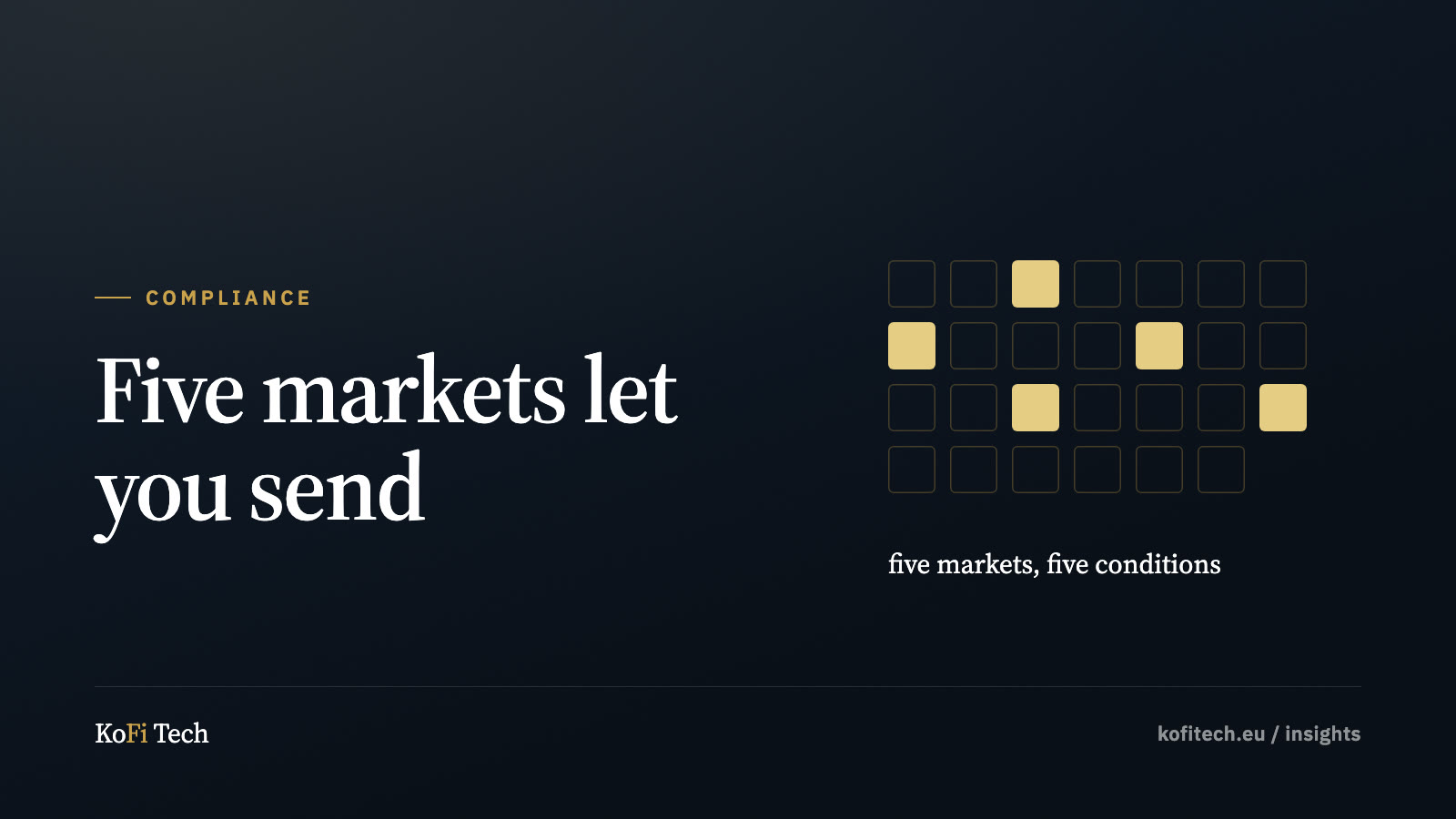
The five European markets where cold email is permitted, and their conditions
France, the Netherlands, Ireland, Belgium and the UK allow B2B email without prior consent. Each attaches conditions, and the French one catches senders who assume opt-out means anything goes.
-
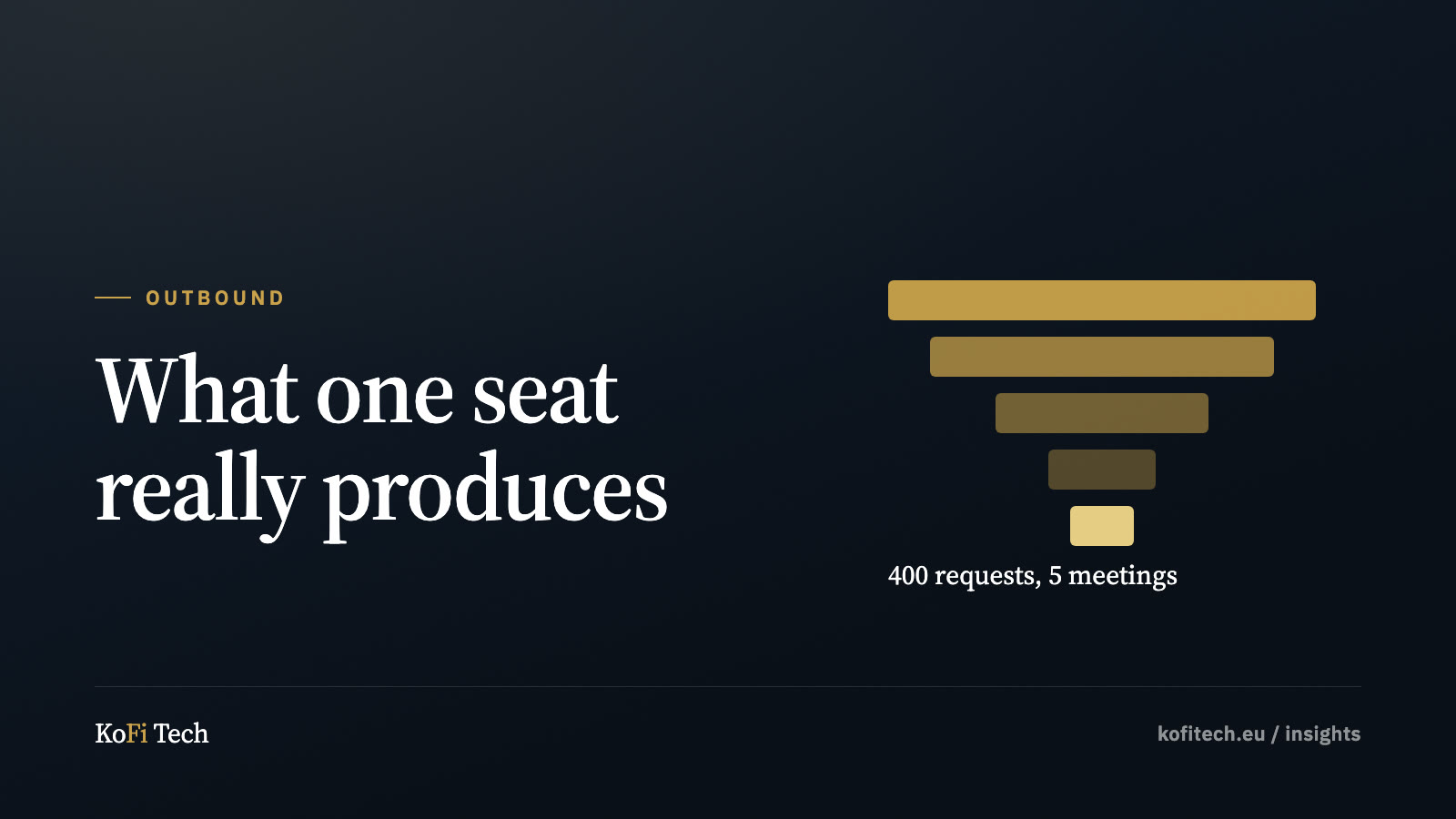
LinkedIn carries the first touch where email cannot
In the consent-based half of the EU, LinkedIn is the lawful opening channel. One seat produces three to six meetings a month, which changes what your plan can promise.

