The five European markets where cold email is permitted, and their conditions
France, the Netherlands, Ireland, Belgium and the UK allow B2B email without prior consent. Each attaches conditions, and the French one catches senders who assume opt-out means anything goes.

France, the Netherlands, Ireland, Belgium and the United Kingdom let you send commercial email to a business address without prior consent, provided the message relates to that person's job and carries a working opt-out. For a company entering Europe with an email-led motion, these five markets are where the programme starts.
Permitted is not the same as unconditional. Each market attaches its own conditions, and the French one in particular catches senders who assume opt-out means anything goes.
Written 6 September 2026 from a Vilnius consultancy. National positions move; verify before a campaign rather than relying on a post.
France
The CNIL, France's data authority, draws the line at the address rather than the person. A
generic professional address such as contact@ or info@ can receive B2B
prospecting without prior consent. A named individual address such as
prenom.nom@societe.fr can also be used for prospecting, on one condition the CNIL
states plainly: the message must relate to the profession of the person contacted.
That condition does real work. Emailing a marketing director about marketing software clears it. Emailing the same person about office furniture or a corporate credit card does not, because neither relates to what they do.
The CNIL also requires that the person is told at the moment of collection, or at first contact, that their address will be used for prospecting, and given a simple means to object.
France is the clearest illustration of why targeting quality is a compliance question and not only a performance question. A list built on job function is lawful. The same volume sprayed at everyone with a French address is not.
Netherlands
The Telecommunicatiewet allows unsolicited commercial email to legal persons rather than to consumers. Businesses may be contacted without prior consent, subject to a clear opt-out in every message and honouring it promptly.
Dutch buyers are direct and English-fluent, which makes the Netherlands the usual first email market for a company entering Europe. The trap is treating that fluency as a reason to skip localisation entirely. Dutch readers notice generic American phrasing and discount it.
Sole traders and partnerships sit in a grey area, because a one-person business blurs the line between a natural and a legal person. Segment those out or treat them with the consumer rules.
Ireland
SI 336 of 2011 permits unsolicited email to a company address without prior consent, with an opt-out mechanism and identification of the sender. Ireland also carries a specific requirement worth noting: the sender must not disguise or conceal their identity, and must supply a valid address to which an opt-out can be sent.
Ireland is small and dense. The addressable universe of mid-market Irish companies in most categories runs to a few thousand, which means you will exhaust the list quickly and any reputation damage travels fast through a connected market. Send carefully rather than at volume.
Belgium
Belgium permits B2B email with opt-out, with a national quirk: the Code of Economic Law requires the sender to provide, on request, the source from which the address was obtained. Keep provenance per row rather than per list, because the request arrives about one specific address.
Language matters more in Belgium than in any other market on this list. Flanders reads Dutch, Wallonia reads French, and sending the wrong one reads as carelessness rather than as a language issue.
United Kingdom
PECR permits unsolicited email to corporate subscribers, meaning limited companies and limited liability partnerships, without prior consent. Sole traders and unincorporated partnerships count as individual subscribers and require consent or the soft opt-in.
Every message needs sender identification and a working opt-out. The ICO has been consistent that an opt-out honoured slowly is an opt-out not honoured.
Since Brexit, sending from an EU base into the UK means the UK GDPR applies to the processing alongside PECR. In practice a well-run EU programme already meets it.
What all five require from you
| Obligation | What satisfies it |
|---|---|
| Identify yourself | Real company name, registration number and address in the footer |
| Relate to their job | Targeting by function, not by company attributes alone |
| Offer an opt-out | A sentence that works by reply, not only a hosted unsubscribe link |
| Honour it fast | Suppression within 48 hours, across every campaign and domain you run |
| Name your source | One line stating where you found them, required in Belgium and useful everywhere |
| Record the basis | A written legitimate interest assessment, kept and dated |
The suppression point is where multi-domain senders fail. If you run three sending domains and somebody opts out on one, the other two must know about it within the hour. A suppression list that lives inside a single campaign is a compliance gap and a credibility problem, because the recipient sees the same company ignoring them.
How the opt-out sentence should read
A hosted unsubscribe footer with a coloured button turns a personal email into a newsletter, and newsletters land in Promotions. Write it as a sentence.
"I found you through the KVK register and your team page. If this is not your area, reply with 'no' and I will not write again."
That single line identifies the source, offers the opt-out, works by reply, and reads like a human wrote it. It also improves reply rate, because it signals you are a person rather than a sequence.
Building the European programme in the right order
Start in the opt-out markets. They give you email at scale, faster feedback and a lower cost per meeting, which is what you need while the offer is still being tested.
Use the learning from those markets to fund the harder ones. By the time you approach Germany with phone and LinkedIn, you know which message lands, which buyer answers and what proof they ask for. Entering Germany with an untested offer and a restricted channel is the most expensive sequence available.
Ripe Leads runs the opt-out markets first for a reason
Ripe Leads is KoFi Tech's outbound arm. Campaigns are segmented by country because the rules differ, and the opt-out markets carry the message testing that the consent markets later inherit.
Visit Ripe LeadsRead next
-
LinkedIn carries the first touch where email cannot
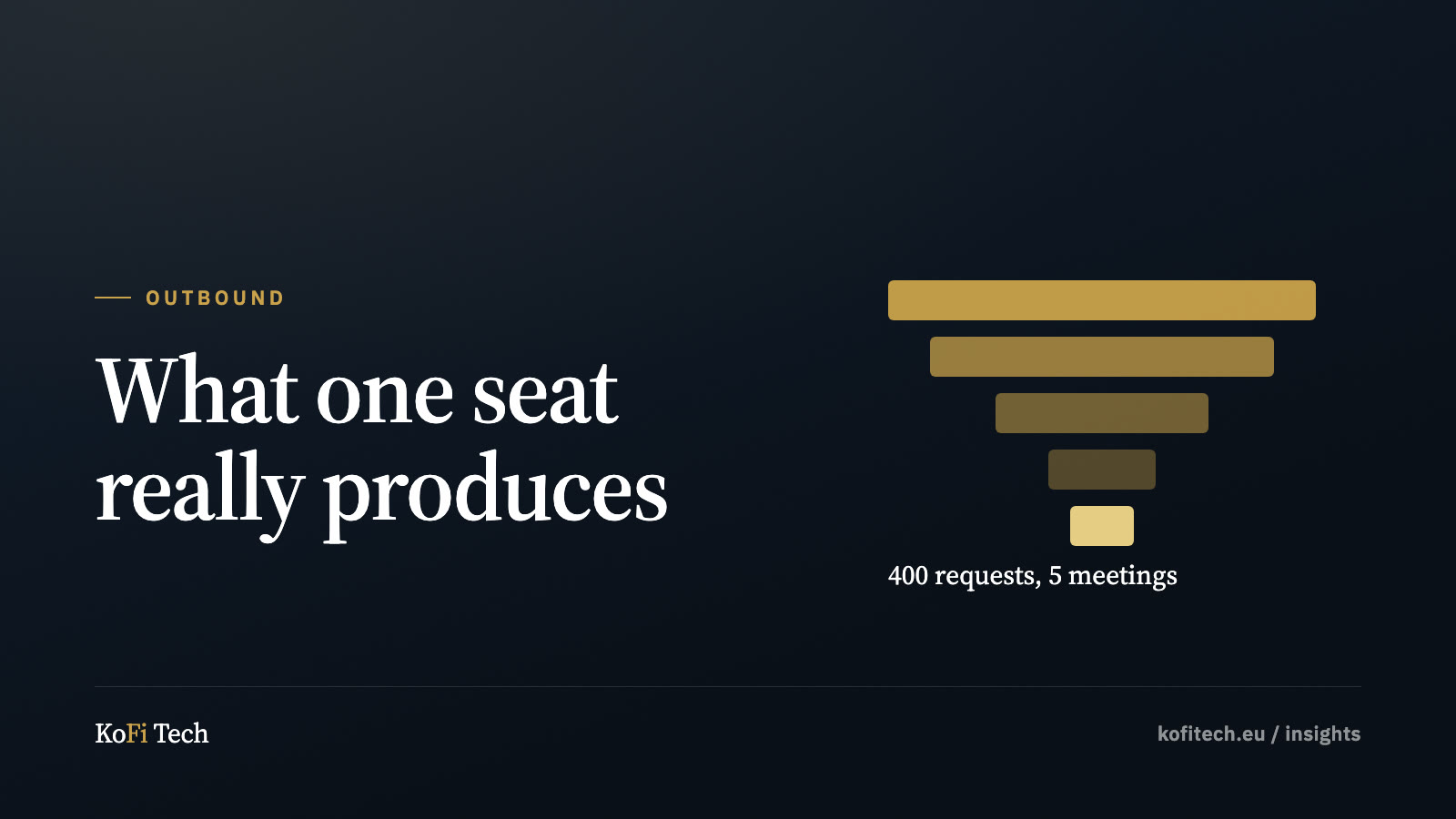
In the consent-based half of the EU, LinkedIn is the lawful opening channel. One seat produces three to six meetings a month, which changes what your plan can promise.
-
Six ways outbound fails, and how the numbers tell you which one you have
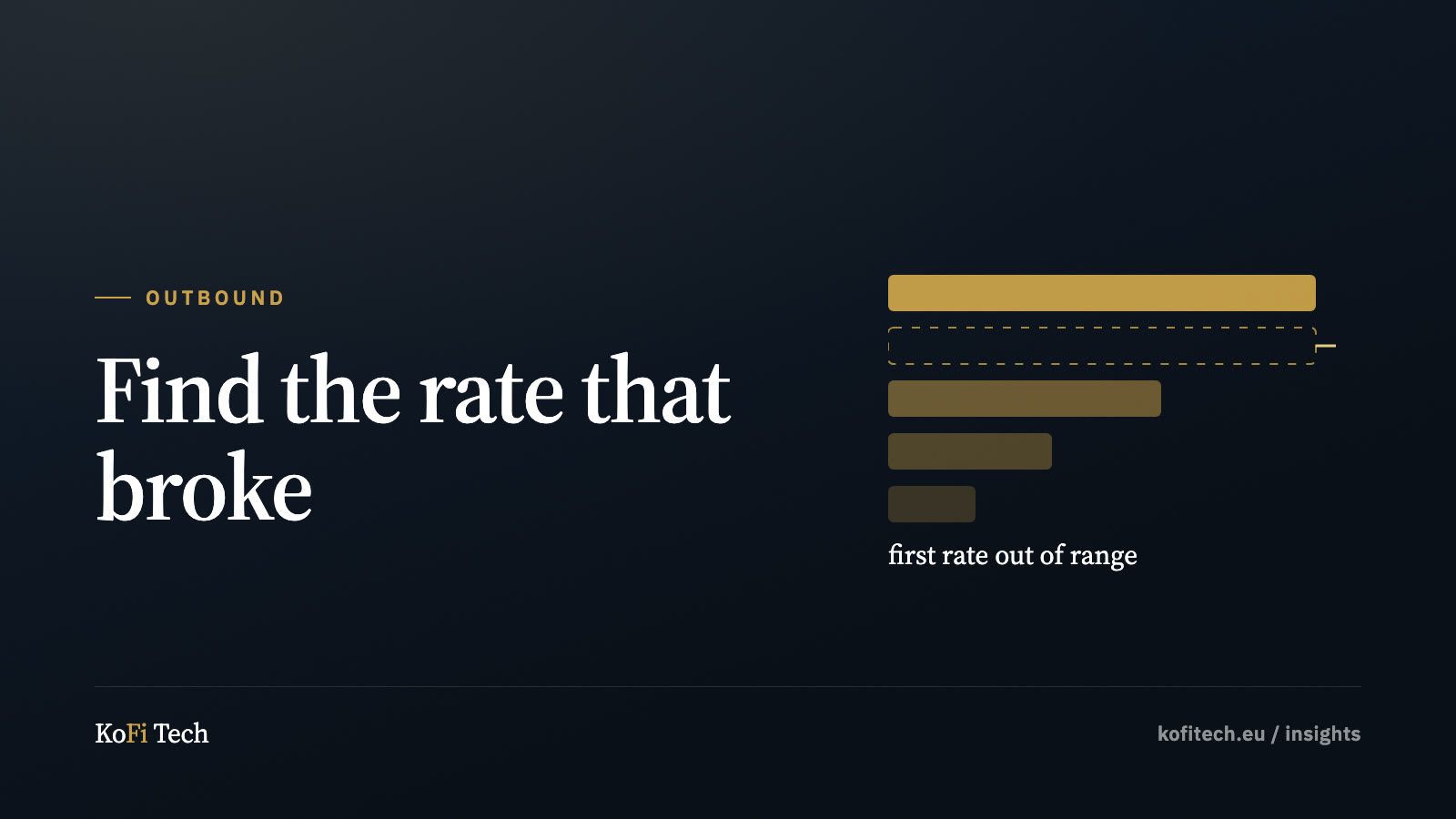
A campaign that produces nothing produces no information either. Four rates, read in order, name the failure before you touch the copy.

