Choosing your first EU market: a scoring model instead of a hunch
Founders pick Germany because it is big, or the Netherlands because everyone speaks English. Six weighted criteria, scored honestly, beat both instincts.

Two instincts decide most first EU markets. Germany, because it is the biggest economy in Europe. Or the Netherlands, because everyone there speaks English and the flights are cheap. Both are defensible. Neither is a decision, and a founder who reaches one of them in ten minutes will spend the next ten months finding out what they skipped.
A first market is a bet on where your first ten reference customers live. Score it like a bet. Six criteria, weighted, filled in with numbers you can defend. The exercise takes a working day and it has changed the answer for most clients who have run it with us.
The six criteria
1. Buyer density, weight 25
Count the companies that match your buyer definition in each candidate country. Not the market size in euros. The count of organisations that could sign. National business registers, sector associations and customs data give you a defensible number for a few hours of work, and the answer often surprises: a country with a third of Germany's GDP can hold more of your specific buyer than Germany does, because the industry sits there.
Density matters more than size for a first market, because your first campaigns are small. A list of 900 qualified companies you can reach three times is worth more than a list of 40,000 you will touch once.
2. Route to a reference customer, weight 20
Who do you already know there? An advisor, a distributor, an ex-colleague, one warm introduction. First customers close through trust, and trust crosses borders slowly. A market where you can name two people who would take your call beats a market where you would start from zero, even at half the buyer density.
3. Sales cycle and decision culture, weight 15
How many people sign, and how long do they take? Nordic and Dutch buyers tend to answer directly and decide with few people in the room. German and French mid-market processes take longer and involve more functions. Southern European deals often move fast once a relationship exists and stall completely before it does. None of this is a quality judgment. It is a cash-flow input, and getting it wrong by two months breaks a first-year plan.
4. Language and localisation cost, weight 15
Price the real work: sequences, landing page, contract templates, and whether you can hold the first call without an interpreter. English-first outreach works in the Netherlands, Ireland and the Nordics. It reads as lazy in France, Italy and Spain, and it caps your reply rate in Germany even where the buyer's English is excellent. Localising properly costs a few thousand euros per market. Localising badly costs credibility.
5. Regulatory and channel drag, weight 15
Two questions. Does anything about your product need a licence, a certification or a local representative? And which outbound channels are actually available to you there? The second one catches teams out: cold email is workable in some member states and closed in others, so a market you love on paper can force you into phone, LinkedIn and paid channels at a different cost per meeting. We covered the country split in cold email and the GDPR.
6. Competition and price level, weight 10
Count the incumbents a buyer would name, and find out what they charge. A crowded market with high prices is often better than an empty one with low prices, because someone has already taught the buyer that this category is worth paying for. An empty market usually means you fund the education.
A worked example
A B2B software company selling maintenance planning to industrial manufacturers, scoring each criterion from 1 to 5 and multiplying by the weight.
| Criterion | Weight | Germany | Poland | Netherlands |
|---|---|---|---|---|
| Buyer density | 25 | 5 | 4 | 2 |
| Route to a reference | 20 | 1 | 4 | 3 |
| Sales cycle | 15 | 2 | 3 | 4 |
| Language cost | 15 | 2 | 2 | 5 |
| Regulatory and channel drag | 15 | 1 | 2 | 4 |
| Competition and price | 10 | 3 | 4 | 3 |
| Weighted total | 250 | 325 | 335 |
Germany has the buyers and loses on everything else: no warm route, long cycles, German-language sales motion, and a consent regime that removes cold email from the channel mix. Poland scores on density and an existing contact. The Netherlands wins on cost of entry despite the smallest buyer pool, which for a company with eighteen months of runway is the right trade.
Change the company and the answer moves. A firm with a German managing director on the board scores Germany a 5 on route to reference, and Germany wins outright. The model is not there to produce a universal ranking. It is there to force the reasons into the open, where a co-founder can disagree with a number instead of a feeling.
Then buy evidence before you commit
Scoring narrows the field to two. Prove it before you incorporate, hire or sign a lease.
Run a probe: 200 companies per market, chosen on a real buying signal, the same offer in both, four weeks of sending. You are watching three numbers. Reply rate tells you whether the message lands. Meeting rate tells you whether the problem is urgent. What they say on the call tells you whether you priced it for that country.
A probe costs a few thousand euros and about six weeks. An entity, a local hire and a year of office rent in the wrong market cost a hundred times that. Founders who run the probe first sound different in the second market conversation, because they are quoting their own data instead of a consultancy's market report.
What the model does not decide
Where you incorporate is a separate question from where you sell. Plenty of companies serve Germany and Poland from a Lithuanian entity, because the entity is a structure and the market is a customer list. Mixing the two produces the familiar mistake of registering a GmbH for a market nobody has tested yet, then discovering the demand is in Warsaw.
Score the market. Test it with 200 emails. Then decide what to register, and where.
The probe, run across both markets
Ripe Leads is KoFi Tech's outbound arm. When a client is choosing between two markets, we build both lists on the same signal and run the same offer into each, so the decision rests on reply data from real buyers rather than a report.
Visit Ripe LeadsRead next
-
What a cold outbound pipeline actually costs in Europe
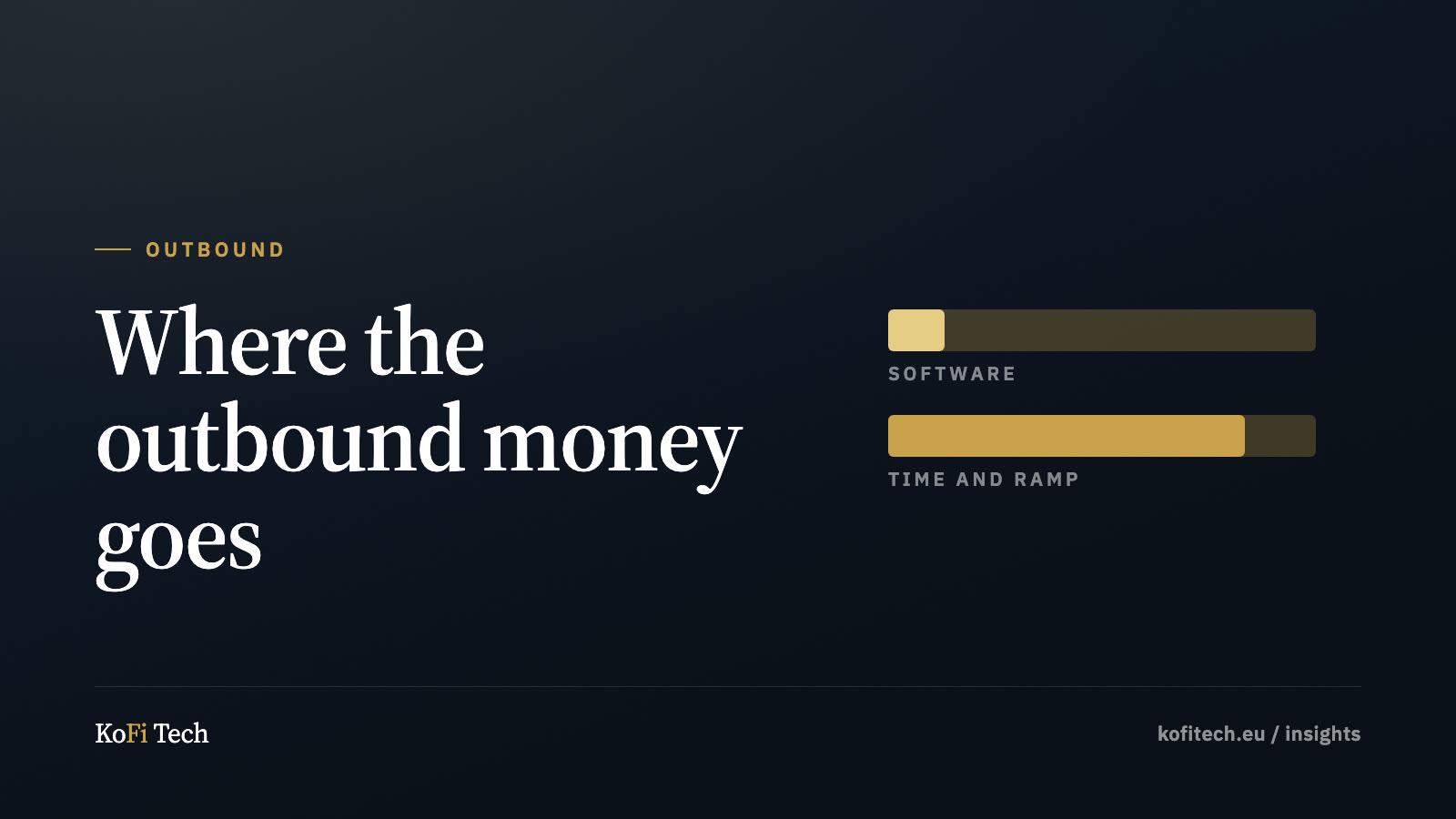
The software bill is the small number. Two hundred euros a month buys the sending infrastructure. The real cost sits in data, warm-up time and the six weeks before the first reply.
-
Your emails are not being ignored. They are not arriving.
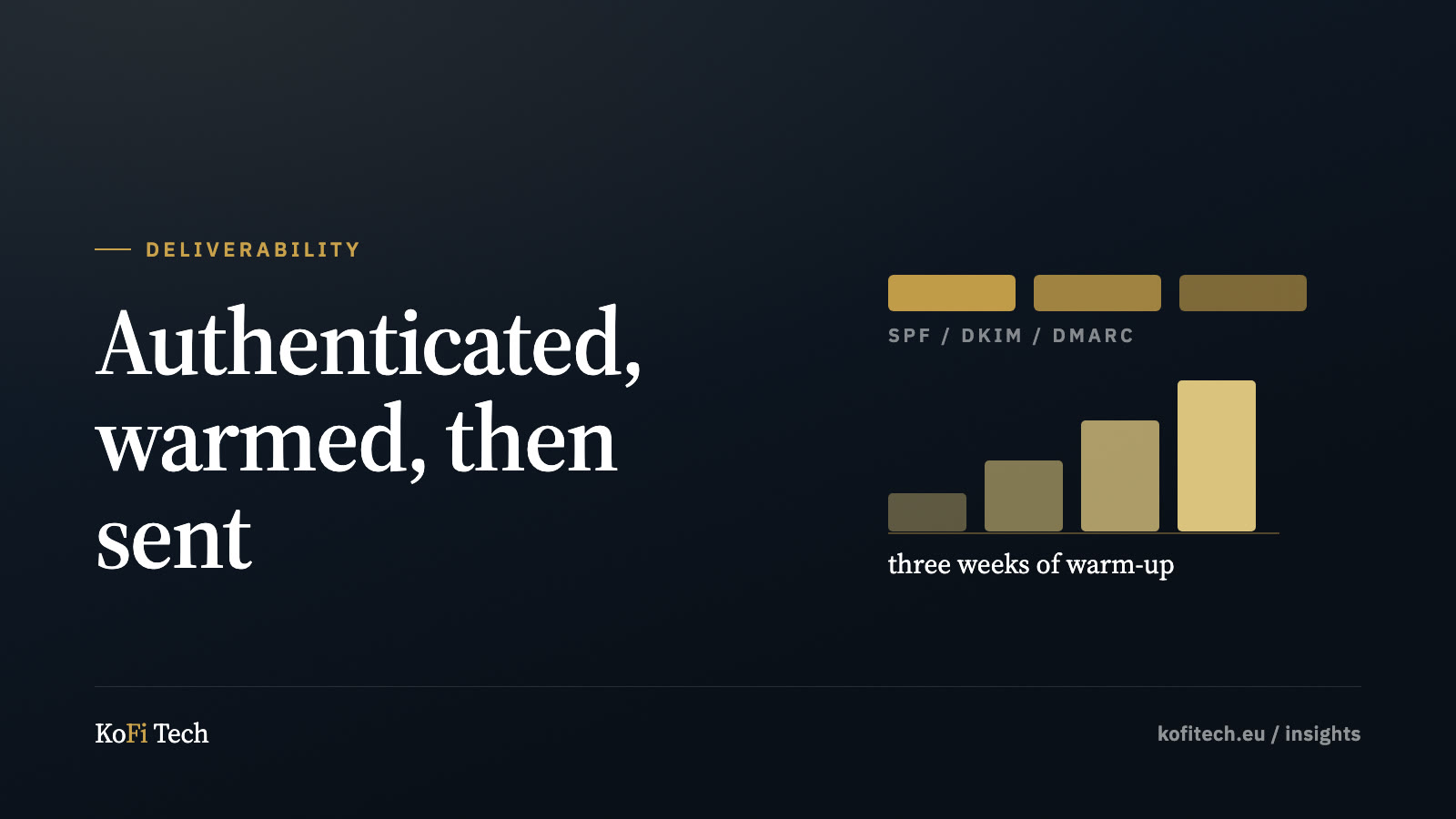
About a third of the cold campaigns we audit never reach an inbox. Authentication, domain separation and a three-week warm-up decide that before a single subject line matters.

